


In freezing weather, you can’t ignore a vinyl siding crack—water will wick behind the cladding, freeze, and force wider splits. Inspect for vertical/horizontal fractures, bottom-edge chips, seam splits, and hairline or spiderweb cracking, especially at corner posts, J-channels, and window/door trim. Re-secure loose laps to maintain required movement tolerances, then seal the crack with a cold-rated weatherproof sealant and check adjacent penetrations for leaks. Next, you’ll see how to prevent repeat damage.
Spot Vinyl Siding Cracks and Hidden Winter Damage
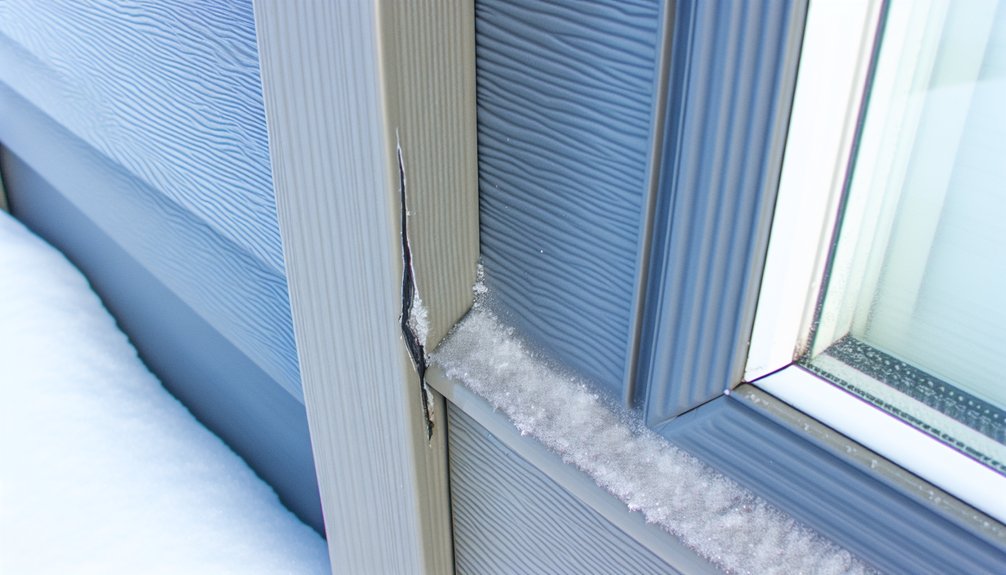
In freezing weather, vinyl siding doesn’t flex—it embrittles, so you need to inspect for both obvious fractures and moisture-driven defects that fail later. Walk each elevation and document small vertical/horizontal cracks, bottom-edge chips, seam splits, and hairline fractures that widen after freeze-thaw. Flag spiderweb cracking from hail and longitudinal splits near nail hems, where tight fastening and thermal stress concentrate loads. Late-winter inspections can catch damage early and help prevent springtime water intrusion.
Focus on high-risk zones: corner posts, window/door trim, J-channels, and any separated caulk or loose flashing. Check for warped or buckled panels, missing courses, and “oil canning” waves that indicate movement restriction or substrate irregularities. Along rooflines, look for ice-dam pressure that distorts panels or opens seams. Probe base trim and the bottom 6–12 inches for spongy, swollen, or crumbly edges from wicking. Correlate exterior findings with interior wall stains, musty odor, dark streaks, bubbling paint, or unusual ice at seams.
Stop Water Behind a Vinyl Siding Crack (Fast Cold-Weather Fixes)
When freezing temperatures make vinyl brittle and seams contract, any crack becomes an active water-entry point, so you need to stabilize the opening and seal it before the next melt/refreeze cycle drives moisture behind the panel. Don’t force the panel; brittle vinyl can shatter and enlarge the breach.
First, re-secure any loose laps so water can’t track behind the cladding. Work to manufacturer-required movement tolerances: maintain end gaps and don’t overdrive fasteners. If you must manipulate pieces, pre-warm the nail heads and the repair patch to reduce cracking. Understanding home systems helps in making informed repairs.
Seal the crack immediately with a cold-rated, weatherproof sealant; standard caulks often lose adhesion in subfreezing conditions and fail after application. Tool the bead to shed water, then address adjacent penetrations—windows, doors, and corners—where wind-driven meltwater concentrates. For a split panel, use a vinyl mending kit patch cut to size, press smooth to match grain, and paint for blend. If you need help quickly, call Munz Roofing at 267-587-7663 for assistance.
Prevent Vinyl Siding Cracks: Inspections, Sealing, and Ice Control
Cold-weather crack repairs buy you time, but you’ll keep chasing leaks and brittle breaks unless you control the conditions that create them. Start with inspections twice a year—spring and fall—and after major freezes. Check for hairline cracking, warping, and loose panels, because small movement failures become water paths under wind-driven rain. Regular home inspections ensure that potential issues are identified before they escalate.
Keep the system clean so sealants bond: wash annually with water and mild detergent using a soft-bristle brush; use a vinegar-water mix for mildew, then dry. Re-seal high-risk joints with paintable exterior caulk around windows, doors, and penetrations, and verify flashing remains intact to shed water. Don’t over-caulk panel laps; vinyl must move.
Control ice and temperature drivers. Grade soil to drain away from the foundation, insulate roof and walls, and maintain attic ventilation to reduce ice dams. De-ice gently with limited rock salt; avoid heat guns or torches that cause thermal shock. Schedule a pre-winter tune-up to catch weak spots early and reinforce worn areas before deep freezes hit.
Frequently Asked Questions
Does Homeowners Insurance Cover Vinyl Siding Cracks From Freezing Weather?
Usually, you won’t get coverage for vinyl siding cracks caused only by freezing—think of it like a hairline crack in a lab beaker after a cold snap: no impact event, no claim. You’re covered when a named, sudden peril causes the crack (hail, wind-driven debris, falling branches). You should photograph damage, log dates/weather, and obtain a contractor report to document proximate cause and meet policy conditions.
Can Vinyl Siding Cracks Reduce My Home’s Energy Efficiency and Increase Heating Costs?
Yes—vinyl siding cracks can reduce your home’s energy efficiency and raise heating costs. You create uncontrolled air pathways, so cold drafts enter and conditioned air escapes, increasing HVAC runtime. You also risk moisture intrusion that dampens insulation, cutting its effective R-value and thermal resistance. In cold weather, contraction can widen cracks, worsening leakage. If you don’t seal or replace damaged panels, you’ll keep paying higher utility bills over time.
When Should I Replace Panels Instead of Repairing Winter-Related Vinyl Cracks?
Replace panels when cracks span long lengths, locks deform, or multiple courses warp, since patching won’t restore weather-resistive continuity. You should also replace if damage repeats, the siding’s brittle with age, or you see rot, staining, or mold at sheathing—those indicate moisture intrusion risk. If repairs would require frequent caulking or mismatched patches, replacement meets durability and appearance expectations and can cut long-term costs.
What Is the Best Vinyl Siding Color to Minimize Cold-Weather Cracking Risk?
Choose any color you like—color doesn’t materially reduce cold-weather cracking risk, since brittleness comes from temperature and impact, not pigment. Like glass in a deep freeze, vinyl stiffens below ~20°F, and aging/UV damage raises fracture risk. You’ll control risk by specifying impact-rated siding (ASTM D4226/D3679), verifying cold-weather expansion gaps per manufacturer, and inspecting after storms; reserve dark colors for heat/warp exposure.
How Long Do Professional Vinyl Siding Crack Repairs Typically Take in Winter?
In winter, you’ll typically see a pro finish a single crack/panel repair in 1–3 hours; multiple damaged runs often take 4–8 hours, and complex moisture investigations can push to a full day. You’ll wait longer if temperatures require controlled warming, larger end gaps, or dry windows for sealants. You should expect same-day temporary sealing, then schedule permanent replacement when conditions stabilize.


