If you live in a 40–50+ year-old home, watch for knob-and-tube or cloth-covered wiring, aluminum branches, and two-prong outlets—each can signal missing grounding and higher fire or shock risk. Don’t ignore frequent breaker trips, flickering lights, buzzing in walls, warm receptacles, or scorch marks, since these can indicate overloads, loose terminations, or arcing. Prioritize a safe panel/service upgrade (often to 200 amps), replace hazardous panels, add GFCI and surge protection, and reduce extension-cord reliance. Next, you’ll see how to sequence upgrades room by room.
Old Home Electrical Hazards You Can Spot Fast
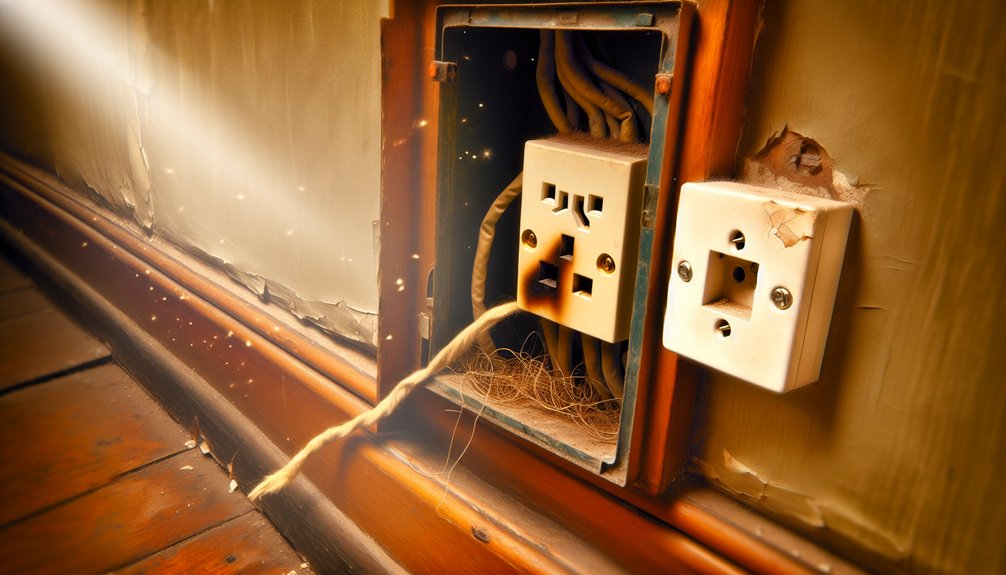
How can you tell an old home’s electrical system needs attention—fast? Start by checking for outdated wiring: knob-and-tube (ceramic knobs, exposed cables in attics/basements) lacks grounding and can’t support today’s loads. Watch for cloth-covered conductors or aluminum branch wiring, both vulnerable to deterioration or overheating. If your house is 40–50+ years old without documented upgrades, treat inadequate amperage as a CPSC-flagged fire risk.
Next, look at receptacles. Two-prong outlets mean no equipment ground, increasing shock and surge exposure, especially in kitchens and baths where you also need GFCI protection. Scheduling regular electrical inspections can help a licensed electrician spot these risks before they escalate. Evaluate load capacity: older homes often have too few circuits for computers, TVs, and appliances, so overloading shows up as dimming lights, repeated breaker trips, or hot outlets. Finally, inspect visible connections: uncovered junction boxes, loose conductors, or damaged outlets can spark and shock.
Warning Signs Your Old Home Wiring Needs a Pro
Quick visual checks can flag trouble, but certain symptoms mean your old wiring needs a licensed electrician now—not a DIY fix. If your breaker trips often, your circuits likely can’t carry today’s appliance loads, especially in pre-1980s systems, and repeated overloads raise fire and shock risk. Flickering or dimming lights can signal loose terminations or overloaded circuits; paired with trips, it can indicate arcing inside a box or panel. Any burning smell, warm receptacle, or scorch marks around outlets or the service equipment means overheating or arcing—shut off the affected circuit and call immediately. Electricity should run silently, so buzzing sounds in walls can indicate arcing or deteriorating wiring that needs prompt inspection. Two-pronged, ungrounded receptacles, common in pre-1960s homes, don’t meet current safety expectations and increase shock and surge risk. If you see aluminum branch wiring or knob-and-tube, assume degraded connections and insufficient grounding and get a professional evaluation.
Old House Electrical Upgrades to Prioritize First
Because old wiring and undersized service weren’t designed for today’s loads, you’ll get the biggest safety gains by prioritizing upgrades that reduce overloads, eliminate shock paths, and bring critical protections up to current code expectations. Start with the service: if you’re at 100 amps or less, or your panel is 30+ years old, move to 200-amp service to stop nuisance trips, flicker, and overheating; replace any Federal Pacific, Zinsco, Pushmatic, or pre-1960s fuse box immediately. Next, install GFCI protection in bathrooms, kitchens, garages, basements, and outdoors as required; you can retrofit two-wire circuits using GFCI receptacles or breakers without full rewiring. Then add outlets in high-use rooms to end extension-cord and power-strip overloads, and swap worn receptacles. Finally, plan whole-home rewiring during remodels or system additions to add grounding, replace aluminum, rebalance circuits, and include whole-home surge protection. As a simple follow-up, switch to LED lighting to cut energy use and reduce bulb-change maintenance.
Frequently Asked Questions
Does Homeowners Insurance Cover Electrical Upgrades in Older Houses?
No—homeowners insurance typically doesn’t cover electrical upgrades in older houses. You don’t get paid because your panel’s “vintage” and your wiring’s “character” decided to age. You only get coverage when a covered peril (fire, lightning) causes sudden, accidental damage. Wear, corrosion, and deferred maintenance stay on you. If code upgrades follow a covered loss, you’ll need Ordinance or Law coverage. Get inspections, document upgrades, meet 100-amp minimum.
How Much Does a Whole-Home Rewire Typically Cost in My Area?
You’ll typically pay about $10,000–$20,000 for a whole-home rewire in many areas, with broader ranges of $8,000–$30,000 (about $5–$17 per sq ft). For 1,500–2,500 sq ft, expect roughly $6,000–$20,000 depending on access. You’ll keep costs predictable by getting permit-ready quotes, requiring NEC-compliant materials, and scheduling a full load calculation and panel review.
Do I Need Permits or Inspections for Electrical Work in an Old Home?
Yes—you’ll usually need permits and inspections; they’re the seatbelt for your electrical work. You must pull permits for panel upgrades, rewiring, adding circuits, or altering wiring, and you’ll schedule required inspections with your local building department. You can often apply as a homeowner, but you’ll provide scope details, contractor credentials, and UL-listed cut sheets. Minor like-for-like device replacements may be exempt. Skip permits and you risk fines, insurance denials, or sale delays.
How Long Does Rewiring Take, and Can We Stay Home During It?
Rewiring typically takes 3–10 days of active electrical work, but your full timeline can run 1–8+ weeks with permits, inspections, and patching. You can stay home, but you’ll face noise, dust, and intermittent power shutoffs; occupancy often adds 1–2 days. If you vacate, crews work faster and safer. You should plan room-by-room access, protect belongings, and follow electrician instructions.
Will Upgrading the Electrical Panel Increase My Home’s Resale Value?
Yes—upgrading your electrical panel can increase your home’s resale value. Think of it like swapping a frayed seatbelt before selling a car: one $2 clip can change trust. You often recoup about 50% of the upgrade cost in resale, and you’ll reduce inspection objections by meeting current code load requirements. A modern 200-amp, labeled, grounded panel also helps buyers insure the home and avoid post-close surprises.