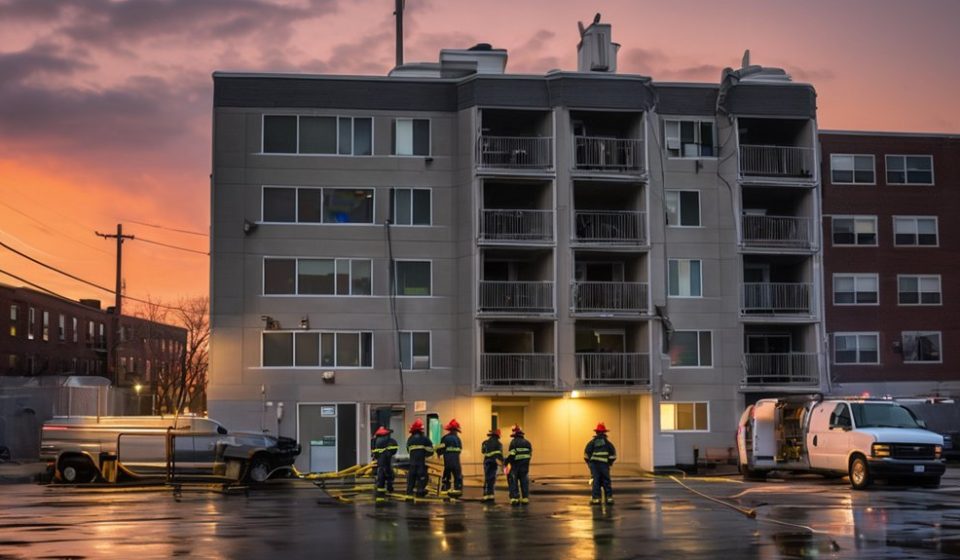

In the first 60 minutes, you’ll treat an HVAC failure as a safety-and-containment event: shut the unit off at the thermostat, evacuate affected areas, and secure hazards like gas, electrical, smoke, or refrigerant (avoid sparks and don’t flip switches in impacted spaces). If safe, shut power at the panel. Check for tenant symptoms and ventilation/humidity impacts, prioritize vulnerable residents, deploy temporary heat/cooling/dehumidification, and call a 24/7 multi-family HVAC contractor with documented details—next you’ll see what to check and stage.
When HVAC Fails, What Do You Do in the First 60 Minutes?
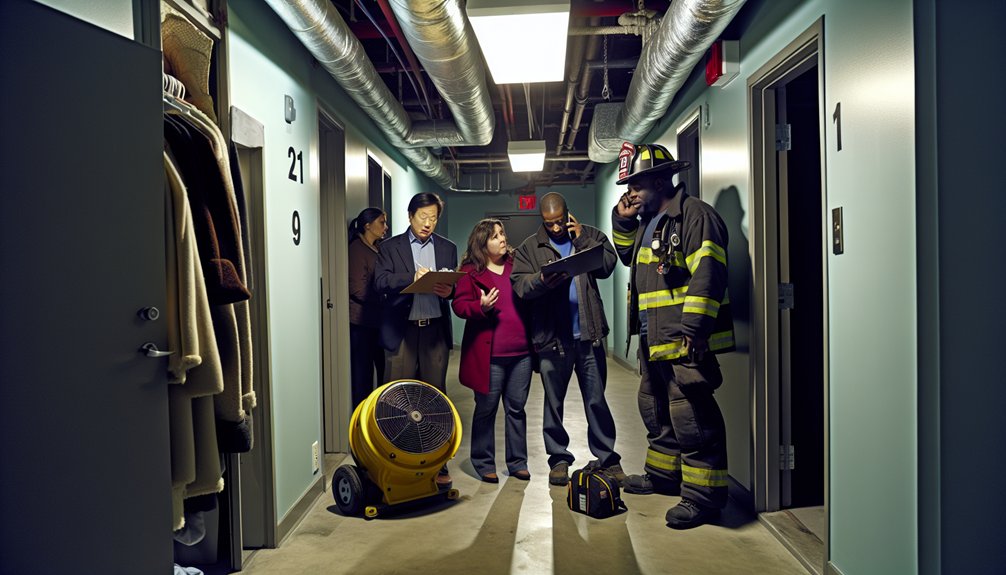
If your multi-family HVAC system fails, treat the first 60 minutes as a safety-and-containment window: shut the unit off at the thermostat, evacuate and secure any affected areas where you suspect gas, electrical, smoke, or refrigerant hazards, and don’t do anything that could create a spark (including flipping switches or using a phone inside the impacted space). If you can safely identify the correct circuit, shut down power at the electrical panel source and isolate the equipment.
Next, run rapid triage on-site: look for electrical damage, gas odor, refrigerant signs, and whether the outage is localized or building-wide, prioritizing older or poorly maintained units. Complete system failure during extreme temperatures is a critical scenario requiring immediate professional attention. Follow your escalation tree: call 911 for fire or imminent danger, then contact utility emergency lines for gas or power issues. Notify your 24-hour Maintenance Operations Center/HVAC emergency line, alert the designated lead technician, and push occupant updates through approved communication channels. Secure access, close off malfunction zones, and deploy pre-staged portable units if available.
Is This HVAC Failure a Tenant Health or Habitability Risk?
How do you know whether a multi-family HVAC failure has crossed from “comfort issue” into a health or habitability risk? You treat it as a risk when ventilation, filtration, or humidity control drops enough to change indoor air quality, or when residents report symptoms tied to exposure: coughing, sore throat, asthma flares, eye irritation, headaches, nausea, fatigue, dizziness, or shortness of breath. Poorly maintained systems can circulate allergens and worsen indoor air quality quickly. Being storm ready ensures that you have a plan in place for emergencies like HVAC failures, helping to mitigate risks associated with poor air quality. Watch for stagnant air and rising CO2 in occupied units, which can impair cognition and trigger headaches. Flag any warm, moist conditions from failed cooling or clogged condensate drainage, because they support mold and bacteria and can aerosolize spores through ductwork. If you suspect Legionella conditions (warm, wet environments around HVAC components), escalate immediately and document. Prioritize vulnerable occupants—children, elderly, and people with asthma—because poor airflow and particulate buildup can quickly become a life-safety concern.
What Temporary Heating, Cooling, and Ventilation Can You Deploy Today?
Speed and control matter most when a multi-family HVAC system goes down, so you’ll want temporary heating, cooling, and ventilation on-site the same day to keep units within safe temperature and indoor-air requirements. If outdoor temps fall below 40°F, deploy electric or indirect-fired heaters, and require safeties that shut off on airflow loss or over-temp. Don’t recirculate air unless you’ve got approval; bring in sufficient outside air to meet ventilation requirements. Emergency supply kits tailored for survival during severe weather events can also be beneficial during such HVAC failures.
For cooling, stage portable HVAC units, spot coolers, or modular scalable systems you can ramp up without reworking infrastructure. Use ductless mini-splits or VRF for distributed zones so you can condition occupied spaces efficiently. Pair equipment with wire-reinforced canvas ductwork or sized Layflat tubing for supply/return, suspend runs to prevent drafts and dead spots, and anchor exterior ducting for wind. Add dehumidifiers, close openings, and trend temperature/humidity with logs and alarms. For critical loads or outages, bring in industrial generators to keep temporary HVAC running without downtime.
Who to Call for HVAC Emergency Diagnosis: and What to Check First?
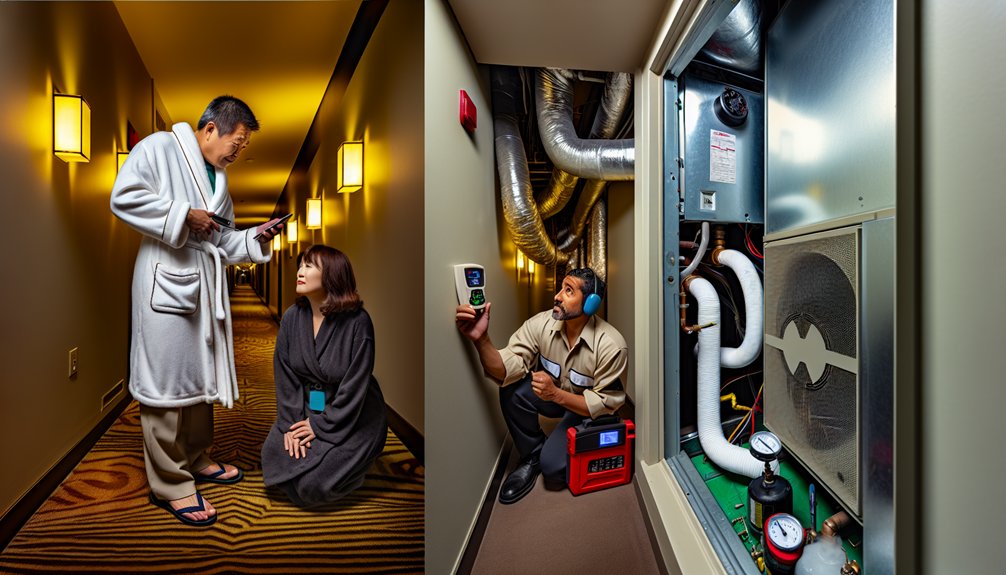
When the building’s HVAC drops offline, start with safety and documentation, then call a 24/7 HVAC emergency contractor with proven multi-family experience (and licensed, certified techs) to get a rapid diagnosis on-site. Confirm they dispatch nights, weekends, and holidays, and that your service agreement states response-time commitments and priority access. In most cases, emergency technicians aim to arrive within a few hours, depending on location, workload, and the issue severity. If you suspect a gas leak, burning smell, or carbon monoxide risk, evacuate affected areas, shut off equipment if trained and permitted, and contact the gas utility and fire department per policy.
Before you call, complete a quick initial check: verify it’s a true system-wide failure by adjusting thermostats and power-cycling at approved disconnects; note unusual noises, odors, and any sudden efficiency drop. Look for visible water or refrigerant leaks, ice on outdoor units, tripped breakers, and error codes. Record start time, weather conditions, and impacted zones so techs arrive prepared.
Frequently Asked Questions
What Documentation Should We Collect for Insurance and Warranty Claims?
You’ll want a paper trail that’s as tight as a drum: collect install/test logs (micron readings, 24‑hour holds, triple evacuation photos), failure/correction/retest reports, and signed contractor attestations plus witness counts. Gather 12 months of maintenance/repair invoices, inspection records, and utility bills. Include as-built drawings, controls documentation, and renovation specs. Add code/IAQ evidence (IMC/IPC/NFPA compliance, condensate details, CO tests, mold findings) and dated photos.
How Do We Communicate Updates Effectively to Tenants and Staff?
You communicate updates effectively by using layered channels and a clear cadence. Send an immediate alert via text, resident app, email, PA/signage, and radios for staff. Assign a single owner (CSR) to publish consistent messages and log them. Push mid-incident updates with ETA, safety guidance, and temporary cooling/heating options. Give real-time internal notes to technicians. Close with a post-incident summary and follow-up schedule.
What Are Typical Emergency HVAC Repair and Temporary Equipment Costs?
You’ll typically pay $600–$1,100 for basic emergency HVAC repairs, $2,000–$5,000+ for major failures, and $10,000–$50,000+ for replacement; after-hours runs $150–$500 plus $100–$250/hr (often 2–3x). Think of it like a burst pipe: one night call can double fast. Budget $50–$150 for expedited shipping, and $200–$2,000 for leak/duct fixes, too.
How Can We Prevent Repeat Failures After the Emergency Is Resolved?
You prevent repeat failures by formalizing a maintenance and commissioning program. Schedule seasonal inspections, change filters on time, clean coils, inspect ductwork, tighten electrical connections, and check refrigerant lines. Commission and rebalance airflow to meet ASHRAE 62.2 and local code, and verify makeup air. Seal ducts/shafts, level equipment, and add zoning. Upgrade to smart thermostats/BMS for alerts, trend logs, and faster corrective action.
Which Capital Upgrades Improve Resilience During Future Outages and Heat Events?
You’ll boost resilience by adding ERVs for unit-level ventilation and dehumidification when central HVAC is down, and by installing air-source heat pumps for efficient heating/cooling during heat events. You should tighten the envelope: air-seal, add roof/wall insulation, and upgrade glazing to cut peak loads. You can also deploy modular mechanical pods to isolate failures, speed repairs, and standardize parts. Document controls, backup power tie-ins, and code triggers.