

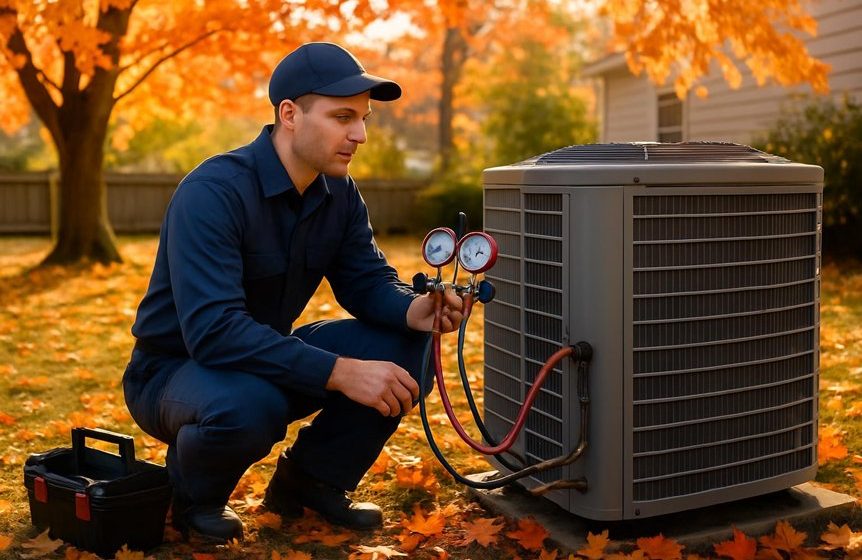
Fall HVAC Tune-Up Checklist: What NJ Homeowners Should Do Every October

Each October in NJ, you should book a licensed HVAC inspection and tune-up for your furnace, boiler, or heat pump to confirm safe combustion, venting, refrigerant levels, and thermostat operation. Change your air filter monthly (shut off power first) and pick a MERV rating your system can handle. Clear and vacuum supply/return vents, then seal duct leaks with mastic or UL-181 foil tape. Keep outdoor units clear with 2-foot clearance, and test smoke/CO detectors—more tips follow.
Run This October HVAC Checklist (NJ Homeowners)
One October checklist can prevent most mid-winter HVAC failures in New Jersey: book a licensed professional inspection and tune-up for your furnace or boiler before temperatures drop, and schedule annual service for each system (twice yearly if you run a heat pump). Your technician should clean components, verify thermostat operation, lubricate moving parts, check refrigerant (heat pumps), clear condensate drains, inspect ductwork, and confirm safe combustion and venting. If you notice odd noises, short-cycling, or uneven heat, don’t wait—schedule service immediately to protect heating efficiency and maximize energy savings.
Storm preparedness is an essential aspect of maintaining a comfortable and safe home during harsh weather conditions. Change your air filters monthly to prevent clogging. Clean vents and registers, and keep indoor return-air openings unobstructed. For outdoor heat pumps, remove leaves and debris and maintain a 2-foot perimeter and 5 feet of overhead clearance; don’t cover the unit. Test smoke and CO detectors, replace batteries, and replace units over 10 years old. If you smell gas, call your utility/provider immediately.
Replace Filters and Set Your Thermostat Schedule
After you’ve scheduled your professional fall tune-up, lock in the basics that keep airflow steady and controls predictable: replace your HVAC filter and program a thermostat schedule. A clogged filter makes the blower work harder, drives up kWh/therms, and can overheat equipment. DOE notes routine replacement can boost efficiency 5–15%, and those filter benefits often show up as lower utility bills and fewer service calls. Additionally, implementing an effective emergency response plan can help ensure your home remains safe during severe weather events.
Follow a maintenance schedule: check monthly during heavy heating, and replace at least every three months per ENERGY STAR; adjust sooner if you have pets or high run-time. Shut off power at the furnace/air handler before opening the filter rack, confirm airflow direction arrows, and seat the filter fully to prevent bypass. Choose a MERV rating your system supports to balance filtration and static pressure. Then set weekday/weekend setbacks that keep safe indoor temps and avoid unnecessary cycling. Clean, high-efficiency filters can reduce indoor pollutants by 48%.
Clear Vents and Seal Duct Leaks for Winter
Before you rely on the heat every day, clear your supply/return vents and seal obvious duct leaks so air can move freely and safely. Turn your HVAC system off at the thermostat and wait for the blower to stop before you touch any grilles. Vacuum the covers and surrounding floor/wall with a hose attachment, then remove grilles and brush/vacuum inside the boot to pull out pet hair, dust, and allergens. Weak airflow, dusty edges, odors, uneven room temps, or rising bills signal restrictions; high-dust homes may need monthly vent maintenance. Personalized feedback from HVAC professionals can also help identify specific issues in your system. Reinstall grilles dry and tight so they don’t rattle or pull in debris. Next, inspect accessible duct runs for gaps, cracks, or loose joints. Seal with mastic or UL-181 foil tape (not cloth duct tape). ENERGY STAR links duct/airflow losses near 20%, so sealing improves energy efficiency and reduces blower strain. Clean, unobstructed ducts can deliver about a 15% airflow improvement after debris is removed.
Prep Outdoor Units and Schedule a Pro Tune-Up
Clean indoor airflow paths first, then give the outdoor unit the same attention so it can reject heat properly and run without overload. For outdoor maintenance, clear leaves, branches, pollen, and dirt weekly, and keep at least 2 feet of plant clearance for code-friendly airflow. Look for internal debris that blocks the coil or fan guard, but don’t open commercial cabinets or attempt repairs—lockout/tagout and qualified service apply. Vacuum loose debris, then check the casing, lines, and base pan for cracks, leaks, or damage. Inspect the outdoor disconnect box for corrosion or loose fittings, and keep the area obstruction-free to prevent strain and extend equipment life. After cleaning, let the unit dry before adding a breathable cover, and switch off the AC breaker when heating season starts. Finally, schedule a pro tune-up: a professional inspection tightens electrical connections, cleans coils, and verifies safeties, combustion, and condensate to reduce CO risk. Regular fall maintenance can improve efficiency and reduce energy use by up to 15%. Additionally, homeowners should be aware of emergency contacts for HVAC-related issues to ensure swift assistance during unexpected breakdowns.
Frequently Asked Questions
How Much Does a Fall HVAC Tune-Up Cost in New Jersey?
In New Jersey, you’ll typically pay $100–$200 for a fall HVAC tune-up, and furnace-only visits often run $80–$150. Coincidentally, right when you notice longer runtimes, those HVAC service costs can help curb seasonal maintenance expenses. You’ll want a code-compliant check of combustion safety, gas leaks, venting, electrical connections, filter condition, and thermostat operation. If you catch issues early, you’ll often avoid $300+ repairs.
Do I Need Permits to Replace My Thermostat or HVAC Equipment in NJ?
You usually don’t need permits for thermostat installation if you’re doing a like-for-like swap with no new wiring, but you should confirm with your local building department because “minor work” rules vary. You typically do need permits to replace HVAC equipment in NJ under UCC HVAC regulations, especially if you touch gas piping, ductwork, electrical, or refrigerant lines. Use licensed pros and keep Manual J/S/D available.
What HVAC Rebates or Incentives Are Available for NJ Homeowners This Fall?
You can tap several NJ HVAC rebates this fall: state incentives through the Whole Home Energy Efficiency Program can pay up to $7,500, and PSE&G may add up to $7,500 plus 0% on-bill financing to $25,000, with instant HVAC rebates up to $1,050. Since upgrades can cut heating/cooling energy use by up to 20%, schedule a required energy audit, pull permits, and use licensed installers.
How Can I Tell if My Furnace Is Leaking Carbon Monoxide?
You can’t reliably tell by smell, so you should use carbon monoxide detectors on every level and near sleeping areas. Watch for headaches, dizziness, nausea, confusion, or breathing trouble—especially if symptoms improve outdoors. Check for a yellow/flickering flame, soot or stains, excess window condensation, rusted venting, or a pilot that won’t stay lit. If alarms sound or you suspect a leak, leave, call 911, then a licensed HVAC pro.
When Should I Consider Replacing My Furnace Instead of Repairing It?
When your furnace hits the end of the road, replace it if furnace age is 15+ years, or if repair costs exceed 50% of a new unit ($4,000–$9,500). You should also replace if you’ve spent $1,200+ on repairs in 24 months, or face a $1,500–$3,500 heat exchanger job. You can usually repair minor issues under $400, especially under warranty. Always prioritize CO safety.


