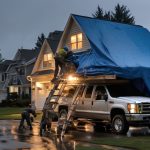
Emergency Roofing Service: What to Expect for After-Hours Storm Response

When you call an emergency roofing service after hours, you’ll confirm active leaks and hazards, and a crew should dispatch within 24 hours. You’ll get a safety-first inspection from the ground up, checking shingles or panels, vents and chimneys, and gutters for clogs and standing water. Expect photos and a written assessment for insurance. Within 24–48 hours, they’ll stop leaks with a properly secured 6-mil tarp and bracing, then map out permanent repairs, costs, and approvals next.
What Happens After You Call Emergency Roofing?

Once you place an emergency roofing call, the contractor will confirm the urgency and dispatch a crew—often within 24 hours, though weather and storm demand can slow arrival. Be clear about active leaks, fallen limbs, or sagging areas so you’re prioritized and can keep people away from hazards until help arrives.
When the crew gets there, you’ll get a professional damage assessment that drives a safe action plan. They’ll install tight, heavy-duty tarps to seal openings, patch larger holes, and brace weak sections to prevent collapse and limit water intrusion, especially if more rain is coming. These temporary steps protect your home while claims move forward. Taking quick action helps minimize damage while you wait for permanent repairs.
You’ll also receive photo documentation and a written assessment to support your insurance file. Next, you’ll get a written estimate that separates temporary work from permanent repairs and flags whether you need a repair or full replacement. Expect scheduling to follow severity and approval timelines.
Emergency Roof Inspection: What’s Checked and Documented
After the crew stabilizes the roof with tarps or temporary patches, they’ll run a fast, safety-first inspection to capture what failed and where water can still get in. You’ll see them start at ground level, then move to the roof surface, and finish inside.
On the roof, they check shingles, tiles, or metal panels for missing, cracked, curled, lifted, loose, or corroded sections. They note blistering, moss, algae, and granules in gutters that signal wear. Next, they inspect penetrations—vents, skylights, chimneys, pipes, HVAC and exhaust stacks—looking for split boots, deteriorated seals, loose fasteners, rusted or separated flashing, and cracked chimney mortar. They verify gutters, downspouts, drains, and expansion joints for clogs, gaps, watermarks, or standing-water evidence, and confirm discharge runs six feet from your foundation. Inside, they scan attic, insulation, ventilation, ceilings, and decking for dampness, sagging, rot, mold, and stains, then document everything with photos and diagrams for insurance and repairs. They’ll also recommend scheduling follow-up checks, since early detection can prevent larger, costlier repairs.
Emergency Roof Tarping and Leak-Stopping (24–48 Hours)
Time is the real enemy when your roof’s been opened up. You’ve got 24–48 hours to tarp and stop leaks before exposed decking and insulation soak, swell, and fail. If rain or wind is forecast, treat the first 24–72 hours as a narrow stabilization window—delays turn a manageable drip into structural water damage. In fact, understanding home systems can help inform your immediate response to such emergencies.
Start with a ground assessment. Don’t climb if you see sagging areas, loose debris, or unstable framing, and never work in rain, high winds, or on slick surfaces. Insurance policies often require mitigation efforts after storm damage, so document what you find and what you do as you go. If it’s safe, use a 6‑mil polyethylene tarp and extend it 3–4 feet past damage on all sides. Secure the peak first: fold tarp over 2x4s and fasten every 12 inches into decking. Pull it taut downward, anchor sides and bottom with boards, and reinforce edges and corners at 6-inch intervals. Recheck for pooling or loose lift.
Permanent Roof Repair: Timeline, Cost, and Insurance Handoff

Because a tarp only buys you breathing room, you should move straight into permanent repair planning—locking in a contractor, material choice, and an install window—before the next weather cycle reopens leaks and drives up damage. Expect a 1–2 day inspection and estimate, then 3–7 days for permitting and scheduling, plus about 1 day for material delivery and site prep. Tear-off usually takes 1 day, followed by a 1 day decking check before new materials go on. A written estimate is typically provided within 1–2 days. It’s crucial to consider vendor reliability when selecting a contractor to ensure quality work.
Install time depends on what you choose: asphalt shingles run 1–3 days; metal 3–5; cedar shake 4–6; tile/slate 6–10; commercial flats (TPO/EPDM/BUR) 3–10. With cleanup and final inspection (1–2 days), plan 7–14 days total, longer in rain or snow.
Cost and insurance handoff vary—call your insurer early, document damage, and confirm what approvals they’ll require.
Frequently Asked Questions
Will Emergency Roof Tarping Affect My Home’s Warranty or Future Roof Replacement?
Emergency roof tarping usually won’t hurt your home’s warranty or future roof replacement if you use a licensed pro and document everything. You’ll protect the structure, limit secondary damage, and support your insurance claim with photos and invoices. Don’t DIY—bad fastening can void repair warranties and trigger claim disputes. Replace the roof within your policy’s 30–90 day window, or coverage for extended tarping may lapse.
Do Emergency Roofers Offer Financing or Payment Plans for After-Hours Service?
Yes—you’ll often find after-hours emergency roofers offer financing or payment plans, though terms vary. Think of financing as your safety rope when the storm hits: you secure the leak now, then pay steadily later. You can use contractor-direct plans (sometimes no down payment or short interest-free windows), personal loans with fast funding, or credit cards/HELOCs if you qualify. Ask about rates, fees, and lien risk.
Can I Stay Inside My Home Safely During Emergency Roof Repairs?
You can usually stay inside if the structure’s sound and you control electrical and collapse risks. Shut off power where water reaches wiring, keep out of rooms with sagging ceilings or exposed wires, and place containers under leaks. Move valuables from wet areas and photograph damage. During repairs, stay away from work zones and roof access points, keep exits clear, and evacuate if the crew flags instability.
What Should I Do With Pets and Valuables During an Overnight Roof Response?
Treat your pets and valuables like passengers on a midnight ferry: move them to the driest, safest deck fast. You’ll secure pets in carriers in a designated indoor safe room, away from leaks, wiring, and any floodwater; don’t leave them unattended near intrusion. You’ll relocate valuables from drip zones, elevate electronics and documents, and seal irreplaceables in containers, covering what can’t move with plastic.
How Do I Verify an Emergency Roofer Is Licensed, Insured, and Not a Scam?
Verify their license/registration on your state’s official lookup (e.g., CA CSLB, AZ ROC, OR) and confirm thresholds that require licensing ($500 CA, $750 AZ). In NJ, confirm Home Improvement Contractor registration. Ask for current general liability, workers’ comp, and any required bond proof in writing. Cross-check complaints. Don’t hire anyone demanding full upfront payment, lacking marked vehicles, or pushing replacements without inspection.