If your roof fails, you’ve got to act fast: keep everyone out of wet areas, shut off power, and call a licensed roofer for a code-compliant assessment. Choose emergency repair (tarping $800–$1,500 or patching $600–$1,200) when damage is localized and the roof’s under 10–15 years old. Move to full replacement ($7,000–$18,000+ in Texas) if you see sagging, rot, mold, or 30%+ damage—especially to limit $5,000+ interior losses. Up next, you’ll see the exact signs, steps, costs, and insurance moves that speed the right call.
Emergency Roof Repair or Replacement: What Do You Need Now?
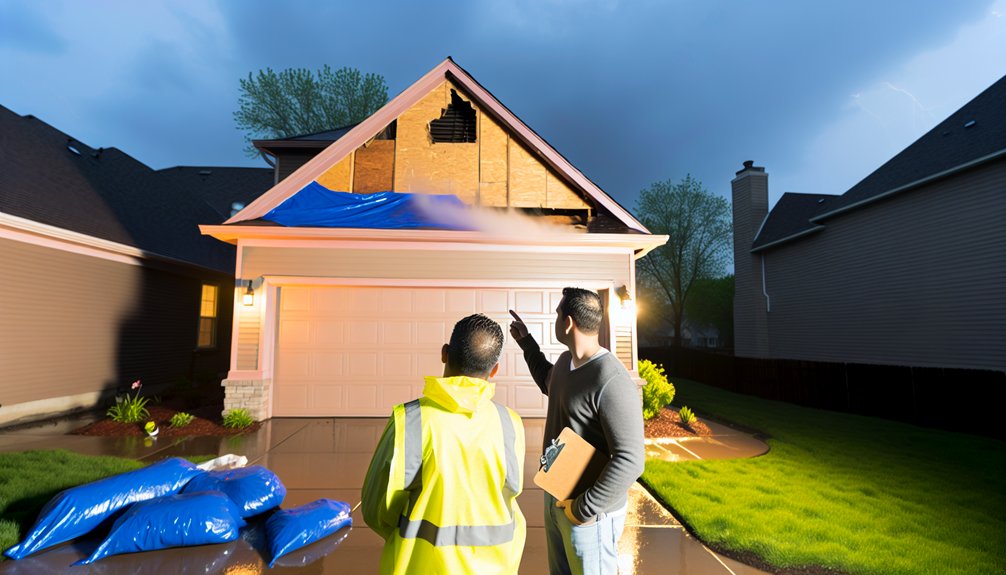
When your roof starts leaking or sections go missing, you need to decide fast: do you stabilize the situation with an emergency repair, or is it safer—and ultimately cheaper—to move straight to a full replacement? Start by protecting life and property: keep people out of wet areas, shut off power where water’s present, and call a licensed roofer who’ll follow local permitting and safety rules. Regular inspections as part of planned maintenance can catch small issues early and prevent emergencies like this from escalating. Being Storm Ready means being equipped to handle such situations efficiently. Expect emergency minimums of $500–$1,000, often $875–$1,750, plus 1.5x–3x labor and material premiums. Common stopgaps include tarping ($800–$1,500) and temporary patches ($600–$1,200), but interior mitigation can add $5,000+ per incident. Compare repair estimates to replacement using the 30% rule; if repairs exceed 30% of a $7,000–$18,000+ (TX) or $8,000–$20,000+ national replacement, plan replacement. Act now to prevent $25,000+ escalation.
What Signs Mean “Replace,” Not Emergency Roof Repair?
Choose replacement when you see structural red flags: sagging planes, dips along the roofline, rotting decking, recurring mold from prolonged intrusion, or interior damage to drywall, insulation, and framing. Replacement is typically recommended when over 30% of the roof is compromised. Financially, repeated repairs and delayed action can triple emergency costs, while storm coverage may offset replacement if you’ve kept up maintenance. A qualified inspection confirms thresholds and keeps you aligned with code and warranty requirements.
Emergency Roof Repair Steps: Tarp, Patch, and Contain Leaks
If a storm or sudden leak compromises your roof, you can limit interior damage fast by evaluating conditions from the ground and attic first, then tarping and patching only once you’ve confirmed the structure is stable. Use binoculars to spot missing shingles, holes, limb impact, fire damage, animal openings, and trace drips in the attic to size the coverage. Choose a heavy-duty poly tarp (6–8 mil minimum, 10–12 mil preferred) with grommets, plus 2×4 battens and corrosion-resistant 3-inch roofing nails or screws with washers. Wear gloves, use a sturdy ladder, and tie off if you must access the roof. Clear loose debris, then place the tarp several feet past the damage, aligned with the roof slope and extended over the ridge when needed. Roll edges around battens, anchor the peak first into sound decking, fasten every 12 inches, then secure sides and bottom. Recheck attic drips, seams, and ballooning. Because Colorado weather can shift quickly, immediate protection from rain and debris is the key benefit of emergency tarping while you arrange permanent repairs.
Emergency Roof Repair vs Replacement Cost in Texas

Sticker shock hits fast after a Texas storm, so you’ll want to compare emergency repair pricing against full replacement before you authorize work. In Texas, emergency repairs often run $300–$1,500+, but they can reach $10,000 when urgency, steep pitch, or specialty materials drive 1.5x–3x premiums and $500–$1,000 minimum service calls. If the damage is isolated and your roof is under 10–15 years old, a localized repair is often the most cost-effective choice. If water enters, interior mitigation can jump $5,000+ per incident, so don’t delay drying and containment.
Replacement averages $7,000–$18,000+ statewide: $6,000–$12,000 for asphalt on a single-story home, $12,000–$24,000 for metal, and $15,000–$25,000 for tile or complex roofs in Dallas or Houston. Budget for code-compliant permits ($75–$250+), tear-off ($1–$5/sq ft), disposal ($300–$700+), underlayment, flashing ($500–$2,000), and rotten decking ($500–$2,000+).
Insurance, Timelines, and ROI: Making the Call Fast
After a storm tears into your roof, insurance rules, project timelines, and long-term ROI quickly determine whether you authorize an emergency repair or push for a full replacement. Start by mitigating damage: tarp leaks and document everything, since most policies require temporary protection to prevent further loss. Your carrier usually covers sudden events—wind, hail, falling trees, fire, impact, vandalism—but won’t pay for wear, poor maintenance, old damage, defects, or bad installation. Understanding your home’s maintenance needs is crucial for making informed decisions.
Approve repairs when damage is localized—missing shingles, small hail hits, limited flashing issues—without structural risk. Move toward replacement when damage exceeds 50%, multiple leaks compromise decking, repair costs near replacement, or code upgrades trigger full replacement. Expect adjusters to compare age, scope, costs, and policy limits. Emergency repairs buy safe time; schedule replacement in fair weather. RCV pays more than ACV, and replacing an aging 20+ year roof can cut future premiums and repeated repair costs.
If more than half the roof is impacted, insurers often treat it as a case for full replacement.
Frequently Asked Questions
Can I Stay in My Home During Emergency Roof Repair or Replacement?
You can sometimes stay during an emergency roof repair, but you often shouldn’t during major repairs or a full replacement. If damage is isolated and crews work outside, you can remain with sealed access points and clear work zones. If work exceeds a day, covers over 30% of the roof, or decking’s compromised, you should relocate. Expect noise, dust, fall hazards, and sudden weather leaks. Ask your contractor and insurer.
How Do I Choose a Reputable Roofer When Scammers Target Storm Victims?
When scammers swarm storm zones like vultures, you choose a reputable roofer by slowing down and verifying everything. You’ll get 2–3 written bids with scope, materials, timeline, and payment schedule. You won’t sign vague contingency forms or blanks. You’ll avoid cash/wire demands and any “deductible waiver” pitch. You’ll confirm ID, license/registration, insurance, and a local address, then check references and permits. Report pressure tactics promptly.
What Warranties Apply to Emergency Repairs Versus Full Roof Replacement?
Emergency repairs usually come with a short workmanship warranty—often one year or less—and they won’t extend your shingle manufacturer coverage; patching can even void it. A full replacement can qualify you for manufacturer material warranties (often 20–50 years, sometimes extendable) plus contractor labor warranties, even lifetime from select installers. Keep permits, photos, and invoices, since insurers may deny claims if you ignore broader roof failures.
Will Emergency Tarping Affect My Roof’s Ventilation or Cause Mold Later?
Emergency tarping can affect ventilation and can contribute to mold if you install it wrong or leave it too long. You must keep intake and exhaust vents (furnace, water heater, attic) clear so combustion gases and moisture can exit. You should use a mechanically fastened, sealed tarp that sheds water and schedule permanent repairs quickly. You’ll cut water intrusion and mold risk when you dry wet insulation and monitor humidity.
Do I Need Permits or HOA Approval for Emergency Roof Work?
Yes—you often can start emergency roof work without a permit, but you’ll still file within 72 hours, and you may still need HOA approval. You can act fast, yet you must document everything. If you’re only patching shingles, sealing flashing, or tarping a leak on a one- or two-family home, you typically don’t need a permit. Structural changes or larger/multifamily roofs trigger permits—call your township.