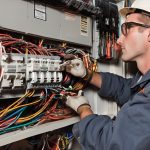
You can’t treat an electrical fire like a regular one because you must assume the equipment is energized (Class C) until you shut off power at the breaker or disconnect. If you spray water, it can form a conductive bridge, shock you, short circuits, and even spread ignition into outlets and electronics. Evacuate if there’s smoke, arcing, or fire growth, and call 911. If you’re trained, use CO2 or a listed Class C agent—then reassess once power’s confirmed off for next steps.
Electrical Fire: What to Do First (Shut Off Power, Evacuate)?

If you suspect an electrical fire or shock hazard, treat the area as energized until you’ve proven otherwise: shut off power at the breaker/disconnect before you go near the victim, equipment, or any wet/metal surface. Don’t step onto metal decking or water-covered floors until you’ve verified de-energization. If you can’t isolate power immediately, back out and control access.
Call 911 right away (use a landline when available) and give the dispatcher exact location, hazards, and injuries. Direct someone else to call Facilities/Engineering/EHS and retrieve the AED at the same time. Evacuate the premises if you see smoke, fire growth, arcing, or unknown energization, and move to the designated assembly point. Keep exit paths clear and follow the site plan you reviewed in the job briefing. If trained and conditions allow, use a Class C extinguisher on electrical fires. Report every shock to your supervisor. Once the scene is safe, start CPR if there’s no breathing/pulse, apply the AED ASAP, and wait for EMS transport.
How Do You Put Out an Electrical Fire Safely (CO2 vs Dry Powder)?
Once you’ve shut off power where you can and cleared people out, you still need the right suppression method for a fire that might be energized. Treat it like a live circuit: pick a Class C-rated agent, keep distance, and aim at the base with short bursts.
If you’re protecting sensitive electronics (servers, switchboards), choose CO2. It displaces oxygen, won’t conduct electricity, and leaves zero residue—so you’re not “debugging” corrosion afterward. A 3.5 kg CO2 unit is commonly sized for small switchboards; mount it near known electrical risks.
If you need maximum versatility, use dry chemical (ABC). Monoammonium phosphate or sodium bicarbonate powder interrupts the combustion reaction and reduces oxygen, and it’s rated for Class C. Tradeoff: it contaminates equipment and can complicate cleanup and recovery.
In high-tech rooms, clean agents (Halotron I, FE-36, recycled Halon 1211) give Class C knockdown without residue. Turning off the power source can change the fire classification, allowing you to use a different extinguisher once it’s no longer an energized circuit.
Why Can’t You Use Water on an Electrical Fire (and When It Becomes Class A)?
Because water isn’t dielectric, spraying it on energized wiring or a live panel can turn the hose stream into a conductive “bridge” that routes current through you, while the runoff splashes into gear and triggers short circuits that spread the fire. Water and foam extinguishers both conduct, so you’re not “cooling it down”—you’re building a lethal pathway and scattering burning material across equipment. Water also infiltrates outlets, panels, and electronics, creating new faults, re-ignition points, and permanent system damage long after flames appear out.
Treat energized equipment as Class C: isolate power first (unplug if safe, hands dry; shut the breaker/lockout if you can), then use a listed Class C agent. Using water on energized equipment can cause electrocution. Once you’ve verified de-energization, the remaining fire involves ordinary combustibles (insulation, plastics, framing) and you can reclassify it as Class A and apply water to cool and overhaul safely. If you can’t confirm power is off, don’t add water.
Frequently Asked Questions
What Causes Electrical Fires Most Often in Homes?
You’ll most often get electrical fires from faulty outlets and aging, overloaded fixed wiring—the hidden “rusted bridge” in your walls. Treat your home like production code: old wiring is legacy debt, and worn insulation spawns short-circuit arcs. You’ll also spark fires by overloading circuits, abusing extension cords, and misusing fixtures (too-high watt bulbs, covered lamps). Patch risk: upgrade wiring, test breakers, stop cord hacks, service appliances.
What Are Early Warning Signs of an Electrical Fire?
You’ll notice early electrical-fire warnings as sensory and system anomalies: burning plastic/rubber or a persistent burnt odor, buzzing/sizzling/crackling or popping near outlets/panels, flickering/dimming lights, bulbs failing fast, and breakers/fuses tripping repeatedly. Inspect outlets for discoloration, charring, scorch marks, warmth, or loose plugs; watch for sparks. If smells intensify, you can’t locate a source, or you hear sizzling, cut power, evacuate, and call 911.
Can Electrical Fires Start Inside Walls Without Visible Flames?
Yes—electrical fires can start inside walls without visible flames. Think of a server rack that “looks fine” until a hot connector cooks it; I once found a “fishy” smell traced to a loose receptacle heating drywall. You should treat buzzing, warm wall spots, flickers, and tripped breakers as failing tests. Kill power at the breaker, stop using that circuit, and call an electrician to inspect.
Which Fire Extinguisher Should I Keep Near a Breaker Panel?
Keep an ABC dry chemical extinguisher (monoammonium phosphate) or a CO₂ unit near your breaker panel; both rate for Class C and won’t conduct electricity. Prioritize de-energizing: trip the breaker/main if you can do it safely. Use the extinguisher only on a small, contained panel fire. If it grows, you can’t see the source, or smoke fills the area, evacuate and call 911.
How Can I Prevent Electrical Fires From Overloaded Power Strips?
Prevent electrical fires from overloaded power strips by keeping your load under the strip’s amp/watt rating, never daisy-chain, and plug high-watt devices (space heaters, microwaves) straight into wall outlets. Think of a strip like a server rack: one hot PDU can take everything down—power strips help drive 3,300 home fires yearly. Use a strip with a built-in breaker, keep it uncovered, inspect cords, and switch it off when idle.