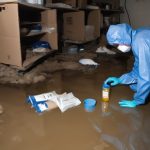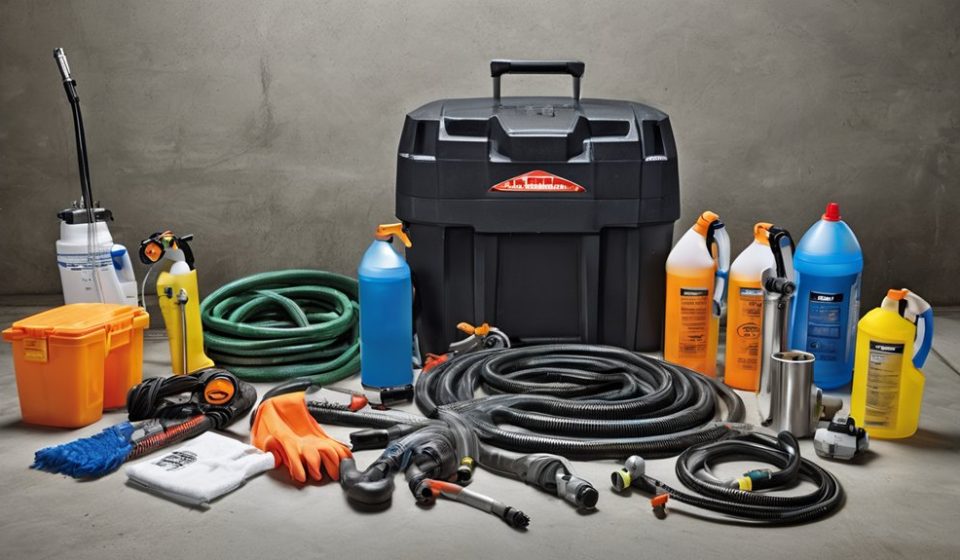

You’ll clean sewer backup faster and safer with durable waterproof nitrile or rubber gloves (double-layer), splash goggles, and a fit-tested N95/P100 or organic vapor respirator, plus an EPA-approved disinfectant after soil removal. Use a sewage-rated submersible or grinder pump for bulk water, then a wet/dry vac for residuals. Clear the line with a snake, cable machine, or 2000+ PSI jetter. Run a True Type A HEPA air scrubber with carbon, then air movers and dehumidifiers to keep RH under 60%. Next, you’ll see how to match each tool to the job.
PPE and Disinfectants for Sewer Backup Cleanup

Three things set the baseline for safe sewer-backup cleanup: proper PPE, respiratory and splash protection, and a verified disinfectant. Start with durable waterproof nitrile or rubber gloves; double-layer them to reduce rip-through when handling contaminated debris. Use rubber gloves during disinfection, especially when you’re wearing an organic vapor respirator. For inhalation hazards, fit-test an N95 or P100; in primary sewage systems, step up to a HEPA respirator with high-efficiency particulate air cartridges. Protect mucous membranes with splash goggles and, when overhead spray is possible, add a face shield over goggles. Wear liquid-repellent or chemical-resistant coveralls and closed waterproof rubber boots that you can sanitize after use. Before cleanup, turn off electricity and gas to reduce electrocution and fire risks. After soil removal, apply an EPA-approved disinfectant or correctly mixed bleach solution to affected surfaces, then disinfect all tools, hoses, wands, and tanks. Remove PPE carefully, then wash hands with soap and water immediately.
Pumps and Wet Vacs for Sewage Removal
Two tools do most of the heavy lifting in a sewer-backup cleanup: a sewage-rated pump to move bulk wastewater fast and a wet/dry vac to capture residual liquid and fine solids. Start by selecting a pump type matched to solids: submersibles run cooled and quieter when fully submerged; grinder or maceration pumps shred waste into a pumpable slurry; solids-handling units may pass 2-inch spherical solids; centrifugal pumps move high volume but don’t like heavy solids. Check maximum flow and pressure, inlet/discharge size, horsepower, and required head, and choose stainless steel or thermoplastics for chemical/abrasion resistance. Favor vortex impellers for high-solids to reduce clogging; open impellers pass solids but wear faster. Set the pump on legs in a correctly sized receiver basin (3–4× capacity; 24-inch simplex, 36-inch duplex) to maintain cooling and minimum run times. Some models are built for continuous duty to maintain performance at a 100% duty cycle. Use the wet vac last, and dispose contents safely.
Snakes, Augers, and Jetters for Drain Clogs
After you’ve removed standing sewage, you still need mechanical line-clearing tools to reopen the drain without forcing contaminated water back into the structure: start with a drain snake or hand auger for short runs (often effective up to ~25 ft in toilets, sinks, and shower traps), step up to an electric cable machine when the clog sits deeper or the pipe diameter increases (typically handling 3–6 in. lines with interchangeable heads), and deploy a high‑pressure jetter when grease, sludge, or roots demand scouring rather than poking.
For commercial food service maintenance, regular grease trap cleaning is essential because grease is the primary issue in commercial kitchens.
Wear cut-resistant gloves and eye protection, then feed the cable slowly to avoid kinking and splashback. Match tool to pipe: a 5‑lb handheld snake suits minor blockages up to 2‑in lines; a 15‑lb manual/electric snake covers general cleaning up to 3‑in. For tougher runs, use a 25‑lb electric auger up to 4‑in, or a 30‑lb electric eel up to 6‑in. Use 2000‑PSI+ jetting to scour grease, sludge, and root intrusions, then flush and verify flow.
HEPA Air Scrubbers and Odor Control Tools

Because sewer backups aerosolize fine particulates and odor-causing gases, set up a portable HEPA air scrubber early to control airborne spread while you finish cleaning and line work. Specify a True Type A HEPA filter meeting IEST-RP-CC001.3 with UL900 Class II flammability; it’ll capture 99.97% at 0.3 microns (dust, pollen, mold spores). Choose metal-frame HEPA cartridges so you don’t embed odors or support microbial growth like particleboard frames can. Establish containment by hanging plastic and attaching flex-duct to exhaust, then dial variable speed to maintain negative pressure toward the work zone; use the hour meter and change indicators to keep performance stable as filters load. For odor control, add activated carbon to adsorb VOCs and sewage gases; run it continuously since it won’t generate harmful byproducts. HEPA-based units are safe for long-term continuous use in occupied areas. Avoid ozone inside occupied spaces; reserve it only for controlled, unoccupied remediation cycles.
Extraction and Drying Equipment to Prevent Mold
In most sewer backup jobs, you’ll stop mold before it starts by extracting liquid water fast, then driving controlled evaporation and dehumidification to keep relative humidity under 60%. Start with sewage-rated wet/dry vacuums or commercial extractors; they’re designed to remove contaminated water without aerosolizing pathogens. Use portable extractors (e.g., X-trac style) to pull bound water from carpets and surfaces, and always extract before you dry to reduce material saturation.
After bulk removal, deploy high-speed air movers to create laminar airflow across walls, floors, and furniture. Lift carpet edges and aim fans to move air on both sides. Exhaust damp air outdoors and pull in dry replacement air when weather allows. Then run industrial dehumidifiers with built-in hygrometers and auto shut-off for final drying. Rapid deployment of drying equipment reduces mold growth risk within 24-48 hours. Verify with hygrometers and moisture meters, rechecking within 2–3 days. If porous items stay wet, isolate and remove them.
Frequently Asked Questions
How Much Does Professional Sewer Backup Cleanup Typically Cost?
You’ll typically pay $2,000–$10,000 for professional sewer backup cleanup, and most homeowners spend $3,000–$5,000. If you’re dealing with blackwater contamination, expect $5,000–$10,000+, with extreme cases reaching $15,000–$50,000. Contractors often price $7–$15+ per sq ft. After-hours dispatch increases rates. Scope, contamination class, and required sanitization/PPE drive your final invoice.
Does Homeowners Insurance Cover Sewage Backups and Related Damage?
Usually, your homeowners insurance won’t cover “unwelcome water” from a sewer backup under standard dwelling or personal property coverage. You’ll need a sewer/water-backup endorsement to cover sudden, accidental discharge, decontamination, and limited contents damage. You should document the loss, stop the source if safe, and use PPE due to biohazard exposure. Expect limits, and note exclusions for floods, neglect, and gradual seepage.
How Long Does Sewer Backup Cleanup Usually Take From Start to Finish?
You can expect sewer backup cleanup to take a few hours for minor events, but typically 1–3 days for full remediation, with restoration sometimes a week or longer. You’ll start with containment, shutoff, and water extraction. You’ll clear the line by snaking (30–60 minutes) or hydro jetting (1–2 hours). Then you’ll decontaminate, sanitize, and run dehumidifiers to dry within 24–48 hours.
What Signs Indicate Hidden Sewage Contamination Behind Walls or Under Floors?
You’ll spot hidden sewage contamination behind walls or under floors through musty or sewage-like odors, discoloration (yellow/brown/gray staining), bubbling paint or soft drywall, warped trim or sagging floors, and gurgling drains with slow flow or backflow at floor drains. One key stat: mold can colonize damp porous materials within 24–48 hours, so treat these indicators as a biohazard—limit access and schedule professional inspection.
When Should I Call a Plumber Versus a Restoration Cleanup Company?
Call a plumber when you need to stop or correct the source: burst pipe isolation, drain snaking, toilet/faucet leaks, sewer line repair, or water heater failure. Call a restoration cleanup company when you’ve got widespread flooding, Category 3 sewage, water intrusion into walls/floors, or prolonged moisture with mold risk. If contamination or structural saturation exists, you’ll need both—plumber first, then restoration for extraction, drying, disinfection.