

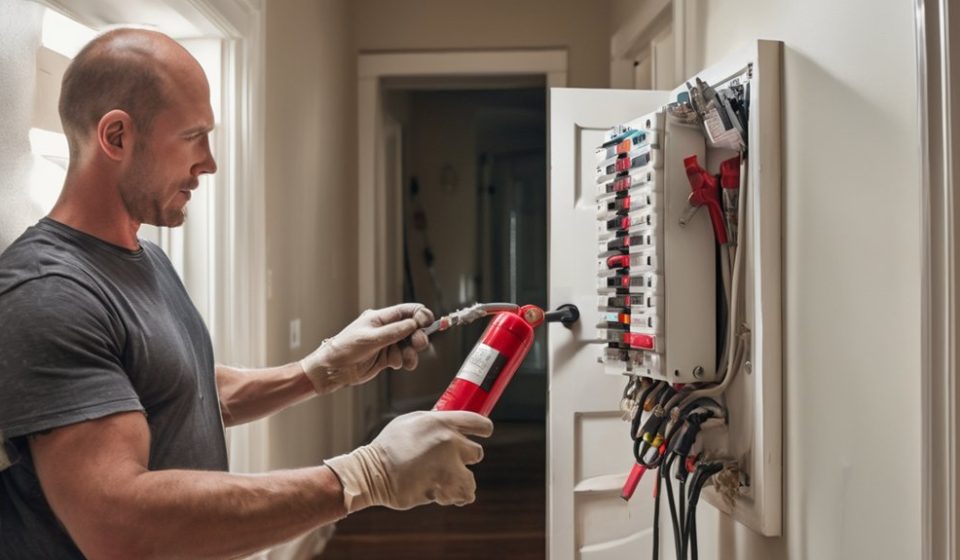

In an electrical emergency, you should cut power fast at the breaker panel, standing to the side with dry hands and rubber-soled shoes. Use the directory, find the tripped breaker, unplug loads, and check for water, heat, or a burnt odor before resetting. If someone’s shocked, don’t touch them—shut off power and use a non-conductive tool. For a small electrical fire, use ABC/BC or CO₂, never water. Keep going to learn next steps.
Cut Power Fast: Breaker, Unplug, Verify Off

When something electrical starts sparking, smoking, or acting unpredictably, you need to cut power fast and do it safely: locate your breaker panel (usually in the garage or basement), use the panel directory to find the circuit for the affected room or outlet, and open the door while standing to the side with dry hands and rubber-soled shoes, keeping one hand tucked back to follow the one-hand rule.
Scan for any breaker in the OFF position or sitting midway; a tripped handle may feel loose. If it’s a GFCI breaker, use TEST to confirm it trips. Before you reset anything, unplug or switch off major loads and disconnect devices on that circuit; check outlets for water, overheating, or burnt odor. If there’s a burning smell, smoke, scorch marks, or a breaker that’s hot or humming loudly, stop and call a professional electrician because these can signal a serious fault. To shut off, push the handle firmly to full OFF in one smooth motion—don’t jump from TRIPPED to ON. Restore power and test one device at a time. If it re-trips, stop and call an electrician.
Handle an Electrical Shock Without Getting Hurt
If someone’s been shocked, protect yourself first so you don’t become the second victim: don’t touch the person or the suspected energized surface, cut power at the breaker or unplug the cord only if you can do it without contact, and if you can’t shut it off immediately, stand on a dry non‑conductive surface (wood or dry newspapers) and use a non‑conductive tool (wooden broom handle or plastic) to separate them from the source. If downed or high‑voltage lines are involved, keep back and wait for the utility. Stay at least 25 metres away because high voltage can arc unexpectedly (high voltage).
Once clear, check responsiveness: shout and tap the shoulder. Open the airway (head tilt, chin lift) and check for normal breathing. Call 999/911 and follow instructions.
If they’re not breathing normally, start CPR on a firm surface: 30 compressions (100–120/min, 2 in deep), then 2 breaths if trained; use an AED if available. Cool burns 10–20 minutes, cover with sterile gauze, and get medical evaluation.
Stop a Small Electrical Fire: Use the Right Extinguisher
Electrical faults can injure a person and then ignite nearby materials, so you need the right extinguisher to stop a small electrical fire without taking a shock or spreading flames. Treat energized wiring, appliances, and power tools as a Class C fire (often shown with a spark symbol). Use only non-conductive agents: an ABC or BC dry chemical extinguisher, or a CO₂ unit that smothers flames and leaves no residue. CO₂ is especially useful around electronics because it leaves no residue. A water-mist extinguisher is acceptable only if it’s dielectrically tested and rated for electrical use up to 1000V. Check the label for Class C/ABC/BC; don’t rely on vague “Type 3” wording, and remember there’s no numerical size rating for Class C. Never use plain water, and don’t use foam unless it’s dielectrically tested. Keep extinguishers inspected and accessible.
Spot Electrical Danger Signs and Call a Pro

Because small symptoms can signal a serious fault behind the wall, treat recurring flickers, warm outlets, burning odors, sparks, visible damage, or outdated wiring as reasons to stop using the circuit and call a licensed electrician. If lights dim when you start an appliance, or multiple rooms flicker, you may have an overloaded circuit, loose breaker connection, or failing conductor, and bulbs may burn out early from voltage swings. If you smell a burning odor near a device or receptacle, it’s a sign of electrical trouble and needs immediate attention. If an outlet or switch feels hot, vibrates, shows discoloration, or smells burnt, don’t plug anything in; shut it off at the breaker. (A correctly rated dimmer can feel slightly warm, not hot.) If you smell burning or see smoke, turn off the main breaker if it’s safe, evacuate, and call for help. Any sparking, popping, cracked devices, or burn marks require immediate replacement and circuit testing. Older two-prong, aluminum, knob-and-tube, or suspect panels need inspection.
Frequently Asked Questions
Should I Reset a Tripped Breaker Immediately, or Wait and Investigate First?
Don’t reset it immediately—wait and investigate first. A breaker trips, lights go out, you reach for the panel; pause. You identify what lost power, unplug high-load devices, and check for heat, odor, moisture, or damage. Then you move the breaker fully OFF, wait a second, and snap it ON once. If it trips again, feels warm, or sparks, you don’t retry—you call an electrician.
Do I Need to Report an Electrical Incident to My Homeowner’s Insurance?
Yes—you should report an electrical incident to your homeowner’s insurance promptly, especially if there’s smoke, fire, lightning, panel damage, or damaged wiring. Don’t wait; delays can complicate or jeopardize coverage. You should document conditions with photos/video, preserve damaged components, and keep receipts for repairs and temporary lodging. Your insurer may require a licensed electrician’s report and recent inspection records to verify cause and rule out neglect or code violations.
What Emergency Kit Items Are Most Useful for Electrical Hazards at Home?
Picture a sudden blackout and a sparking outlet—what do you grab first? You’ll get the most value from bright, non-flame light (flashlights, lanterns, glow sticks), extra batteries, and a hand-crank radio for outage updates. Keep a charged power bank, a whistle, and a stocked first-aid kit with nonlatex gloves and antiseptic wipes. Add a fire extinguisher rated for electrical fires and basic tools to shut off power safely.
How Can I Childproof Outlets Without Creating New Electrical Risks?
Use tamper-resistant receptacles (TRRs) where possible; they block single-slot insertion without loose parts. If you use plugs, choose squeeze/twist models that can’t fall out and become choking hazards. Avoid masking tape on loose outlets. Install box-style covers for outlets with devices plugged in to stop cord pulling and prong access. Manage cords with wall channels and clips; don’t run cords under rugs. Replace frayed cords immediately.
When Should I Schedule a Full Home Electrical Inspection, and How Often?
An ounce of prevention is worth a pound of cure: schedule a full home electrical inspection every 3–5 years, and sooner if risks rise. If your home’s new, inspect around year 10. If it’s 25–40+ years old, inspect more often due to aging wiring, insulation, and panels. Book inspections before buying/selling, after renovations, storms/floods/lightning, or adding EV chargers/HVAC. Act fast for tripping, flickers, burning smells, or sparks.


