

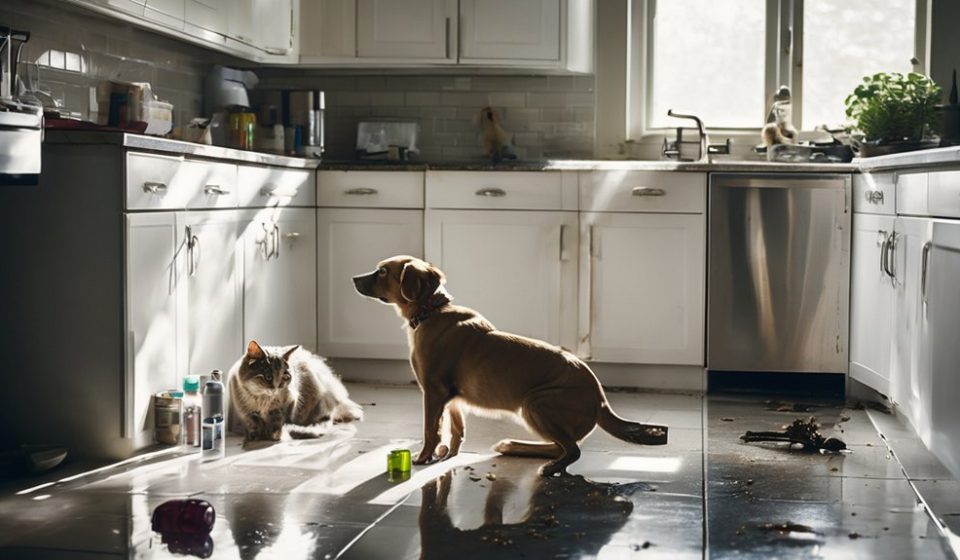

You’ll prevent many pet poisonings by controlling everyday household and yard toxins. Anchor furniture, hide cords, and gate fireplaces; lock chemical cabinets, medications, and trash; and keep laundry pods, cleaners, essential oils, and cosmetics out of reach. In garages and yards, store antifreeze, automotive fluids, rodenticides, polyurethane glues, and metaldehyde baits high and locked—tiny exposures can be fatal. Avoid feeding chocolate, xylitol, grapes/raisins, onions, or garlic. Next, you’ll see a room-by-room checklist and highest-risk toxins.
Pet Poisoning Prevention: Room-by-Room Safety Checklist
Although many household poisonings happen in seconds, you can reduce your pet’s risk by auditing each room for predictable exposure routes—ingestion, chewing, entrapment, and secondary toxin contact. In the living room, anchor furniture, cover electrical cords, move breakables to high storage, block fireplaces with a gate, and remove small toy parts to prevent choking and GI obstruction. In the kitchen, use lidded food and trash containers, lock chemical cabinets, place toxic substances out of reach, apply appliance locks, and clean crumbs to reduce toxic food ingestion. Keep the dishwasher closed to prevent sharp utensil injuries. In bathrooms, close toilet lids, lock up medications, secure toilet paper, use lidded trash, and keep essential oils and cosmetics inaccessible; these exposures commonly cause GI, neurologic, or hepatic signs. In bedrooms, check drawers and closets, secure shoes and cords, clear jewelry, and guarantee window screens hold. In laundry areas, latch cleaners high, lock chemicals, keep machine doors closed, and check drums before cycles.
Garage and Yard Toxins That Cause Pet Poisoning
Once you’ve secured the main rooms, focus next on the garage and yard—areas where concentrated chemicals, baits, and plants create high-risk, fast-acting exposures. Treat spills and accessible containers as emergencies: ethylene glycol antifreeze can be fatal in tiny doses, and paint products attract curious pets. Store automotive liquids and corrosives high and locked. Keep polyurethane glues contained; they can expand after ingestion and cause obstructive GI foreign bodies that often require surgery.
In the yard, avoid metaldehyde snail/slug baits; they’re highly toxic to dogs and cats. Lawn and garden items drive frequent poison calls (nearly 3,500 APCC calls in 2012). Bone/blood meal fertilizers and herbicides can trigger vomiting and diarrhea, and pets can dose themselves by walking on treated grass then licking paws. Rodenticides cause 7% of 2024 exposures; blocks get moved by rodents, and ingestion can lead to bleeding, kidney failure, seizures, or death. Keep the rodenticide packaging and label information because varying clinical signs depend on the product type.
Household Chemicals, Foods, and Meds That Poison Pets
Because most poisonings happen in everyday spaces, your biggest risks often come from routine household items—cleaners, human medications, and common foods. Many toxic products have sweet flavors that can lure curious pets. Household cleaners (detergents, bleach, solvents) drive 34.8% of household product calls and can cause caustic burns and systemic toxicosis; laundry pods often trigger vomiting, drooling, and aspiration risk. Air fresheners and essential oils can provoke tremors and neurologic signs, especially in cats. Paints, glues, and nail polish remover also cause GI and neurologic injury.
Human meds remain a leading threat: OTC products account for 35.4% of calls, with NSAIDs like ibuprofen causing kidney failure; acetaminophen and cold/flu products can cause severe hypoglycemia, seizures, or death at low doses. Foods (14.8–15.2% of cases) include chocolate, xylitol, grapes/raisins (acute kidney injury), and onions/garlic. Rodent baits and pesticides add bleeding, hypercalcemia, or neurotoxicity risk.
Frequently Asked Questions
What Should I Do if I Suspect My Pet Swallowed a Toxin?
Get your pet away from the source and call your vet or an emergency clinic immediately; you can also call ASPCA Poison Control (888) 426-4435. Don’t induce vomiting or give home antidotes unless they direct you. Note your pet’s weight, what was swallowed, how much, and when, and bring packaging or samples. If you see tremors, seizures, collapse, trouble breathing, or bloody stool, go now.
When Should I Call a Vet Versus an Animal Poison Control Hotline?
You call your vet immediately if your pet shows symptoms (vomiting, lethargy, breathing trouble, seizures, swelling, persistent diarrhea) or you suspect a high-dose, caustic, or fast-acting exposure—don’t wait. If you’re tempted to “watch and see,” call a poison hotline first for risk stratification when symptoms are absent or mild, after-hours, or details are unclear. Have product info, amount, time, weight; follow their plan.
What First-Aid Steps Are Safe Before Professional Help Arrives?
You can safely gather the toxin’s name, estimated amount, and exposure time, then record your pet’s species, weight, age, symptoms, and location. You should call your vet or Pet Poison Helpline immediately and follow their directions. If skin/eye exposure occurred, you can flush with lukewarm water 10–15 minutes and wash with mild soap. Don’t induce vomiting or give charcoal unless professionals instruct you. Save packaging, monitor breathing.
How Can I Train My Pet to Avoid Household Hazards Consistently?
You’ll get consistent hazard avoidance by training three cues daily—“Leave it,” “Stay,” and “Drop it”—then reinforcing them around real-life temptations. Start “Leave it” with a closed-hand treat; reward from your other hand only. Build “Stay” with distance, duration, and distractions. Teach “Drop it” by trading a high-value treat for objects. Combine training with environmental proofing: latch cabinets, secure trash, store chemicals high, block risky rooms.
Which Pet Insurance Plans Cover Accidental Toxin Ingestion Treatment?
You’ll find accidental toxin ingestion covered on many accident-only plans, including PetPartners AccidentCare, ASPCA, and AKC accident coverage. You can expect diagnostics (labs, imaging) and treatment (meds, hospitalization, ER care, surgery) to qualify after a typical 2–3 day waiting period. You’ll still face an annual deductible and coinsurance. You won’t get coverage if it’s deemed pre-existing or tied to prior ingestion habits.


